
How can engineering make our roads safer?
Road crashes are almost always multi-factor events involving the driver, vehicle and/or the environment, including the road. There are many elements of the road that contribute to safety outcomes. These include road width, alignment, the presence of and type of intersections, and roadside hazards such as trees, poles and ditches.
In the past, road safety has focused on the road user through enforcement and education. It is still crucial that we enforce safe limits on the road system.
However, it is also recognised that whatever we do to make drivers more alert, law abiding and competent, some will still make mistakes. They should not, however, have to suffer unnecessarily harsh crash outcomes, such as serious injury or death. We must work on designing and operating a road network that is more forgiving and protecting of driver mistakes and crashes.
By re-designing roads to make them safer, we can reduce both the number of crashes that happen and the severity of those that do occur. All risk cannot be eliminated through infrastructure and vehicle safety improvements alone. Drivers must always share responsibility for a safe road system.
Engineering measures can influence the messages we receive as drivers by making a road more 'self-explaining'. Ideally, each type of road should have a recognisable and distinctive set of self-explaining features such as signage, lane width, road markings and speed limits. This ensures roads are predictable so that road users can expect particular safety features on each type of road.
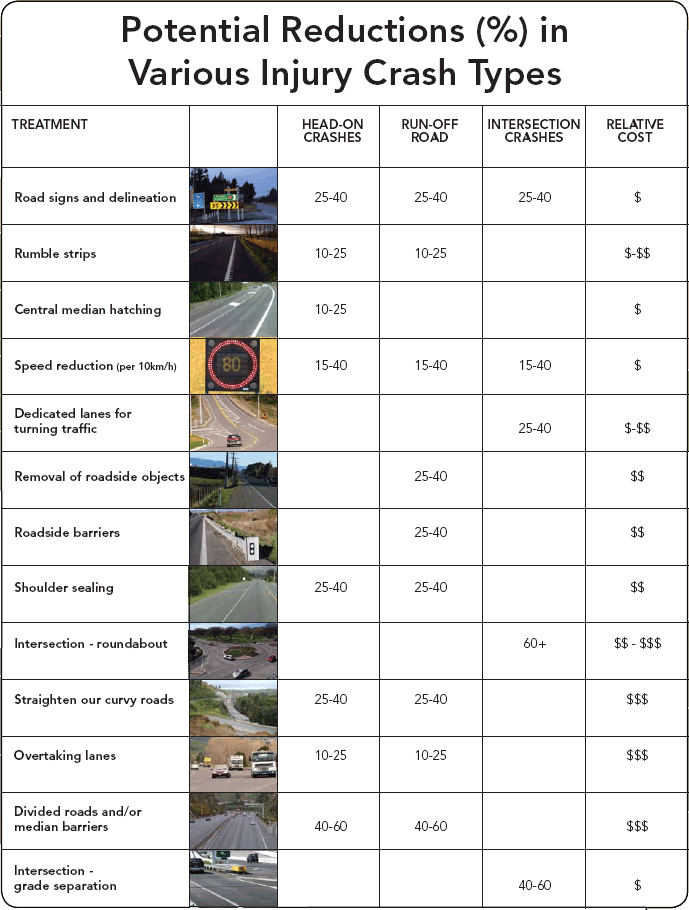
To reduce the consequences of those crashes that do occur, roads can also be made more forgiving. Examples of specific road environment treatments, their potential effect on the four main crash types, and their relative costs are provided in the following table.
| Key | |
| $ | Less than $50,000 per km or low cost |
| $$ | $50,000 to $500,000 per km or medium cost |
| $$$ | Greater than $500,000 per km or high cost |
This table has been prepared with the assistance of the iRAP Road Safety Toolkit.
The effect of combined treatments is not cumulative, as various treatments are often targeting the same types of crashes.
Related Links